
Posted on
May 2nd 2025
Tags
What is the environmental footprint of digital technology ?
When thinking of digital technology and the environment, we often think of all the ways digital technology can help reduce our environmental impacts : electronic documents that avoid printing on paper and save trees, or AI (Artificial Intelligence) helping us solve the climate crisis. This is sometimes referred to as “IT for Green”. But there is an other aspect of the subject that is very important to consider : the environmental footprint of digital technology.
The term “environmental footprint of digital technology” refers to all of the impacts that these technologies have on our environment. This is known as “Green IT”.
What exactly does that include ?
The different impacts
When considering environmental impacts, we inevitably think about the greenhouse gases (GHG) emissions that are responsible for the ongoing climate changes. However, this is not the only aspect to consider as digital technology leads to a variety of environmental impacts. Here are a few examples of the impacts of digital technology on our environment :
• GHG emissions : the most widely reported impact.
• Abiotic resource depletion : metals and minerals are finite resources on our planet. The consumption of theses resources for digital technologies increases the risk of shortages.
• Water consumption : the manufacturing of electronic devices or the cooling of data centers, for example, can require large amounts of water and compete with other uses in regions where the resource is scarce.
• Pollutions : pollution of soil and waters during the extraction of raw materials or emissions of fine particles into the air during the generation of electricity from coal ; digital technology is responsible for a wide variety of pollutions. All these pollutions create toxicity issues for human health as well as for the ecosystems we rely on.
In total, the Joint Research Centre of the European Commission defines 16 indicators to consider to evaluate an environmental footprint.
The scope
In the same way that we first think about GHG emissions, we often picture the environmental impact of digital technology in terms of electricity consumption for our daily devices like our TV or laptop. But in reality, the environmental footprint of digital technology includes all of the impacts generated by all the digital equipments and services, along their whole life cycle.
The definition above combines 2 key elements :
- All the equipments and services must be considered.
- The impacts are not limited to the moments the services or devices are used : their whole life cycle must be considered.
When it comes to digital equipments and the infrastructures that allow digital services to operate, there are far more of them than we usually imagine. They are often divided into 3 tiers :
• Tier 1 : user devices. This tier includes laptops, smartphones, TVs, but also games console, printers and connected devices.
• Tier 2 : networks. This tier includes cables (overhead, underground, submarine, and in our buildings), antennas, routers, telecommunication satellites ; anything allowing a connection between devices. In studies, this tier is often restricted to interconnections between remote sites by telecommunication operators.
• Tier 3 : data centers. This includes servers, and all the other digital equipments hosted in these buildings, as well as the infrastructures for cooling and backup power supply.
Each of these 3 tiers must be considered to evaluate the digital footprint in a comprehensive and reliable way.
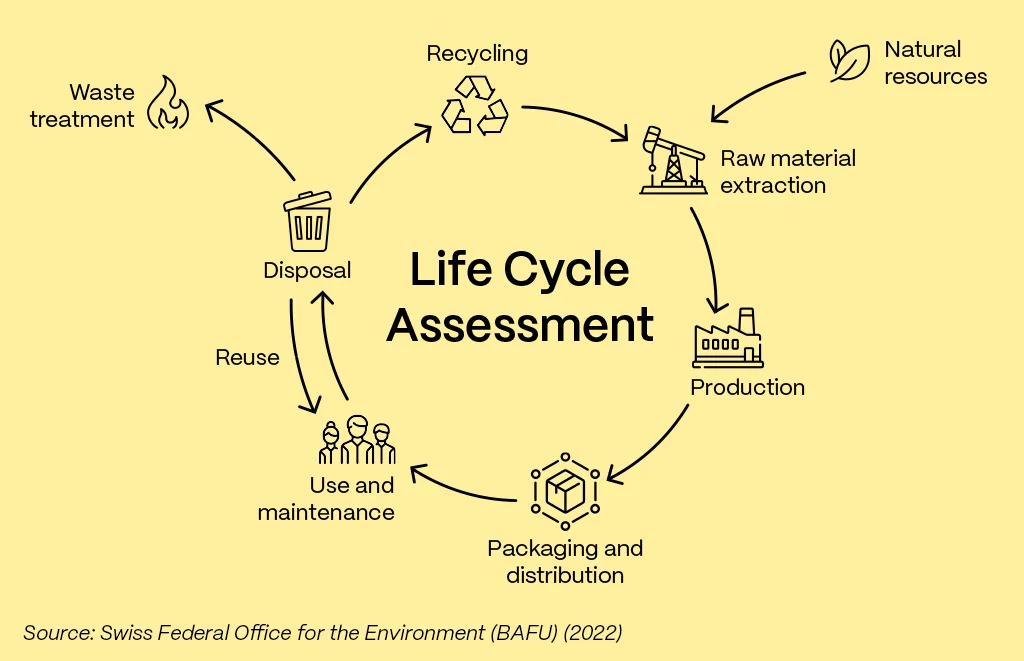
Regarding the 2nd point listed above, it is important to acknowledge that equipments and services have environmental impacts during their whole life cycle.
The main stages of a product or service life cycle are as follow :
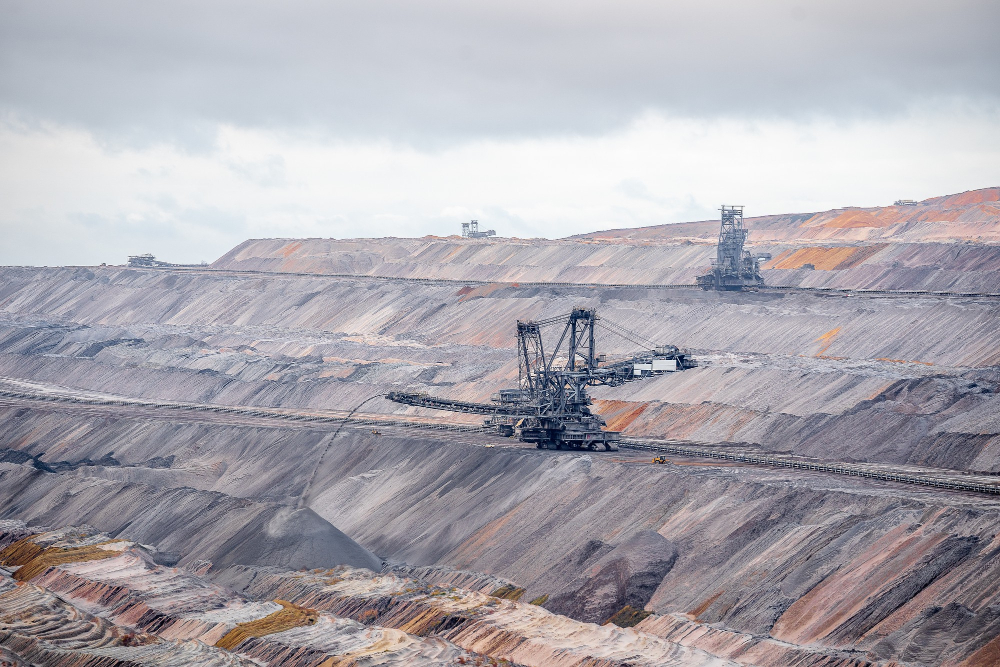
• ⚒️ Production : the extraction of raw materials from mines and the manufacturing processes are responsible for numerous impacts.
• 🚚 Distribution : components are often produced and assembled in various countries before being shipped throughout the world, using modes of transportation that consume large amounts of fossil fuels.
• 💻 Use : this is just the tip of the iceberg, consuming electricity, sometimes generated using fossil fuels, and water.
• ♻️ End of life : reuse, repair, recycling ; the fate of end of life devices plays an important role in the impacts of the equipment.
Evaluating the environmental footprint of digital technology
Considering all the elements described above, it is easy to understand why the environmental footprint of digital technology can’t be measured. For the environmental impacts, the necessary data is difficult to obtain and often incomplete and uncertain. Manufacturers sometimes provide data on the impacts of their products and independant databases also exist, like the Impacts Database of ADEME. Additionally, there are some paid databases, such as Resilio, or databases managed by associations like Boavizta. Finally, some specialized databases, like INIES for construction, also include data on digital equipment. Each of these data sources has its own methodology, which varies in transparency. This is why, in reality, it is only possible to evaluate the environmental footprint of digital technology and even these estimates are a challenge to accomplish. Furthermore, digital technologies are continually evolving, requiring to constantly update the estimates. But this work is essential to shift towards a more sustainable digital future !
💡 Tip !
To learn more about this subject, why not participate in a Digital Collage ?
And for IT professionals, The Green Compagnon offers dedicated training courses on ecodesign/environmental footprint, and you can benefit from a discount with the code “KOEVOO2025”.
Otherwise, do not hesitate to contact us at bonjour@koevoo.tech !
© Cover photo Wirestock, Freepik.
Other posts
Every post >Contact
Let's meet !
Thank you for reading our blog. If you wish to find out more, feel free to contact us.
Koevoo needs the contact details you provide to contact you about our products and services. You can unsubscribe from these communications at any time. See our Privacy Policy to learn more about how to unsubscribe, our privacy policies and our commitment to privacy.